Comparison
of Non-Destructive Test Methods for Concrete Compressive Strength in
Existing Structures
Estimates
of in-place strength for the structural evaluation of concrete
structures is a required element of a modern repair/rehabilitation
project. Although in-place cores are the most direct method
for determining concrete compressive strength, economy of both time and
money, has lead to the development of other test methods in
determining in-place
concrete
compressive strength
. This has
also allowed more tests to be taken for a significant increase in the
confidence with the quality of the existing concrete.
However,
different tests have different limitations and uses. These
need to be fully understood before the test program starts, so that the
correct test is used for the correct application. This
article will review the most common test methods for in-place concrete
compressive strength testing: coring, the Windsor Probe™, the Windsor
Pin™, manual test hammer, and the digital test hammer
|
Test
Method
|
Compressive
Strength Range*
|
Coeeficient
of Variation
|
Notes
|
|
Coring
|
Unlimited
|
N/A
|
- Expensive
- Provides Indisputable Benchmark Data
- Low Number of Tests Possible Due to Sturctural and
Aesthetic Integrity Issues
|
|
WindsorProbe™
|
17000PSI
| 110 MPa
|
>10%
Typical
|
- Relatively Inexpensive
- Widest Range of Compressive Strength of
Non-Destructive Test Instruments
- Large Number of Tests Possible for Statistical
Analysis
- Possible Aesthetic Issues
|
|
WindsorPin™
|
5300
PSI | 36.9 MPa
|
>12%
Typical
|
- Very Inexpensive
- Ability to Test Wider Range of Materials
- No Aesthetic Issues
- Large Number of Tests Possible for Statistical
Analysis
- Low Maximum Strength
|
|
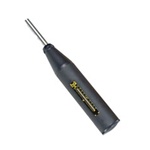
Manual ReboundHammer
|
9000PSI
| 62 MPa
|
>18%
Typical
|
- Least Expensive
- Surface Preparation May be Required
- Most Variable
- Rapid Test
- Ability to Take Large Amount of Data for Statistical
Analysis
- Tedious Calculations Need to Be Done
|
|
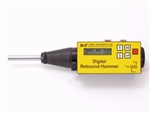
Digital Rebound Hammer
|
9000PSI
| 62 MPa
|
>18%
Typical
|
- Low Cost
- Surface Preparation May be Required
- Most Variable
- Rapid Test
- Ability to Take Large Amount of Data for Statistical
Analysis
- Calculations are Done Automatically
|
* As
related to 150mm ( 6 inch ) x 300mm ( 12 inch ) cores, to convert to
concrete cubes multiply by 1.1
Coring:
Typical
'Destructive' test method for concrete compressive strength.
Cost
in both time, money and structural and aesthetic integrity of the
structure hs lead to the development of 'Non Destructive' Tests.
This
is most effective Non Destructive Test, with adherents and
practitioners around the globe. The wide range of concrete
compressive strength that can be tested as well as the simplicity and
rapidity of it's use has contributed to the test popularity.
It
uses a powder actuated charge to drive a pin into the concrete under
test. The depth of penetration of the pin
corresponds to
the compressive strength of the material under test.
Using
resistance to penetration with a high tensile steel spring this test
method can not only test concrete, but brick, mortar, masonry and more!
A low coefficient of variation, rapid and simple to use, this
test has adherents around the globe. The only limitation is
the maximium compressive strength that can be tested.
The most
popular test method. This is very simply to use and almost no
cost. Drawbacks are the high coefficient of variation and the
significant amount of tests needed to be taken in order to determine
the result.
This method
supplements the manual test hammer by using modern digital electronics
to record and manipulate the large amount of data needed to effectively
use the rebound test hammer method.